
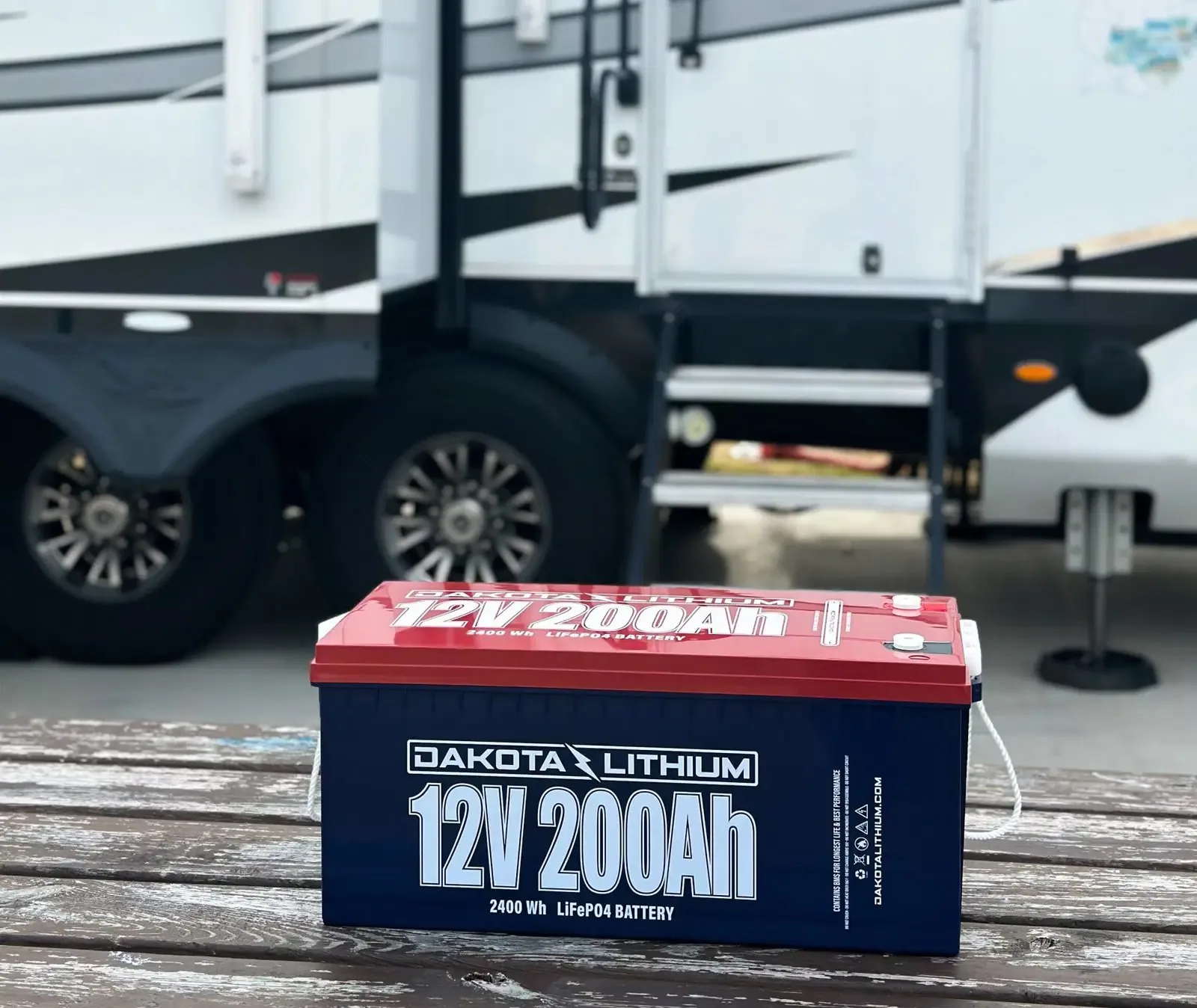
Deep Cycle RV Battery
A deep cycle RV battery is your house bank: the furnace fan at 2 AM, the fridge all weekend, the water pump, the lights, the inverter making coffee. We carry 12 volt deep cycle RV batteries in lithium LiFePO4 only, from group 24 drop-ins to single-battery 460Ah-class banks, from brands we would bolt into our own rigs.
RV Deep Cycle Batteries
 Deep CycleGroup 24
Dakota Lithium 12V 100Ah Deep Cycle Heated RV Battery
 Deep CycleGroup 25
Ionic Lithium 12V 60Ah Deep Cycle RV Battery with Bluetooth
 Deep CycleGroup 31
Ionic Lithium 12V 100Ah Deep Cycle RV Battery with Bluetooth
 Deep CycleGroup 8D
EPOCH 460Ah 12-Volt Deep Cycle RV Battery V2 Elite (5.89kWh)
What a Deep Cycle RV Battery Does
A starting battery cranks an engine and rests. A deep cycle battery does the opposite job: steady current for hours, drained deep and recharged, night after night. Everything in your rig that runs while the engine is off lives on the deep cycle bank, which is why it is the one battery decision that shapes how you camp.
The Sizes RVs Actually Use
Most rigs start with a 12 volt deep cycle RV battery in a standard tray size: group 24 (roughly 50 to 85Ah), group 27 (roughly 66 to 110Ah) or group 31 (roughly 95 to 125Ah). A lithium drop-in keeps the same case and terminals, so the swap is unbolt and rebolt. Bigger rigs and motorhomes step up to the group 8D class, where a single 460Ah lithium battery replaces what used to be a four-battery lead bank and forty feet of cable.
Lithium vs Lead-Acid: The Usable-Capacity Math
The number that matters is usable capacity. Draining lead-acid past about half its rating shortens its life fast, so a “100Ah” lead battery is really a 50Ah battery in daily use. LiFePO4 runs to 80, even 100 percent depth of discharge without damage, which is why one 100Ah lithium replaces most 200Ah lead setups while shedding well over a hundred pounds from your tongue weight. It holds voltage flat so the furnace fan does not groan at half charge, and it is rated for 3,000 to 5,000 cycles where lead tops out around 300 to 500. Per season camped, it is the cheapest battery you can buy.
How to Size an RV House Bank
Add up your loads in amps, multiply by hours, and you have your overnight in amp-hours. A typical example: a 12V fridge averaging 4 amps across 24 hours is about 55Ah, the furnace fan adds 15 to 25Ah on a cold night, lights and the water pump another 10. That weekend rhythm is why 100Ah is the house standard, why boondockers run 200 to 400Ah, and why the 460Ah single-battery class exists for off-grid rigs. Size for your longest real night, add 20 percent, and if you would rather talk it through, that is exactly the math we do at 888-274-7544.
Charging: Converters, DC-DC and Solar
LiFePO4 wants a charger with a true lithium profile. Older lead-acid converters stop early and leave capacity on the table, so pair the bank with a lithium-profile converter or a unit from our lithium charger lineup. Charging from the alternator while you drive works through a DC-DC charger, and solar needs nothing special beyond a controller with a lithium setting. Winter campers should know lithium discharges fine below freezing but should not be charged until the cells warm past about 32°F, which is what heated packs are for.
We stock deep cycle RV lithium from EPOCH, whose 460Ah V2 Elite is the one-battery house bank, alongside Dakota Lithium and the rest of our RV battery lineup. No house labels, no relabeled imports: every pack carries its full manufacturer warranty and ships from a U.S. warehouse near you.
Deep Cycle RV Battery FAQ
What size deep cycle battery does my RV need?+-
The house standard is a 12V 100Ah, which covers lights, fans, water pump and a fridge for a weekend. Boondockers and four-season rigs typically run 200 to 400Ah, and the single-battery 460Ah class covers off-grid motorhomes. Size for your longest real night plus 20 percent margin, or call and we will do the math with you.
What is the difference between a deep cycle RV battery and a starting battery?+-
A starting battery delivers one short burst of high amps to crank an engine, then rests. A deep cycle battery delivers steady current for hours and tolerates being drained deep and recharged daily, which is exactly the job RV house loads hand it.
Can I replace my RV lead-acid batteries with lithium?+-
Yes. Lithium drop-ins are built to standard group sizes with standard terminals, so the swap is usually unbolt and rebolt. The one change that matters is charging: give the bank a lithium-profile converter or DC-DC charger, because lead-acid programs stop short and leave capacity unused.
How long does a 100Ah deep cycle RV battery last?+-
Two answers. Per charge: nearly the full 100Ah is usable, so a typical 60 to 80Ah overnight fits with margin to spare. Per lifespan: LiFePO4 is rated for 3,000 to 5,000 cycles, which works out to a decade or more of regular camping.
Do deep cycle RV batteries charge while driving?+-
Yes, through a DC-DC charger wired to the alternator, which is the correct way to alternator-charge lithium. On shore power a lithium-profile converter does the job, and solar charges through any controller with a lithium setting.